
GrowthCraft

founder burnout

Startup founder reviewing business systems and planning priorities to prevent burnout while building a sustainable company.

Founder Burnout Is a Business Problem, Not a Personal Problem

Startup founder reviewing business systems and planning priorities to prevent burnout while building a sustainable company.
Founder burnout is often caused by business systems that rely too heavily on one person. Building repeatable processes creates healthier companies.

Founder Burnout Is a Business Problem, Not a Personal Problem

When most people picture a startup founder, they imagine someone working late nights, answering emails at midnight, skipping vacations, and sacrificing nearly everything to build a company. Society often celebrates this image as proof of commitment and determination.

Unfortunately, this mindset has also contributed to one of the most common reasons startups fail.

Founder burnout.

Burnout is often treated as a personal issue. Founders are told they need better work-life balance, more sleep, better exercise habits, or improved stress management. While those things certainly matter, they miss the bigger picture.

Burnout is usually the result of how a business is designed and operated.

If every decision depends on one person, if every customer problem lands on the founder’s desk, and if every process exists only inside the founder’s head, the company itself creates burnout.

That makes burnout a business problem.

For first-time founders, recognizing this distinction is incredibly important. The goal is not simply to survive another week. The goal is to build a company that can continue growing without requiring the founder to carry every responsibility forever.

This article explores why founder burnout happens, how to recognize it early, and the practical systems every startup should build to avoid becoming another burnout statistic.

Why Founder Burnout Kills Startups

Most startups begin with one person doing nearly everything.

Sales.
Marketing.
Product development.
Customer support.
Finance.
Operations.
Fundraising.

At first, this makes sense. Resources are limited, budgets are small, and hiring is often impossible.

The problem begins when the company starts growing but the founder never changes how work gets done.

Instead of building systems, founders simply work harder.

Instead of documenting processes, they memorize everything.

Instead of delegating decisions, they become the bottleneck.

Eventually, every important activity depends on one exhausted individual.

Research continues to show that founder mental health challenges are widespread. A study by the National Institute of Mental Health highlights the relationship between chronic stress and impaired decision making. Similarly, the Harvard Business Review has published multiple studies showing that sustained overload significantly reduces strategic thinking, creativity, and leadership effectiveness.

For startups, these consequences become expensive.

Burned-out founders often experience:

  • Slower decision making because every choice feels overwhelming rather than exciting.
  • Reduced creativity, making it harder to solve customer problems or identify new opportunities.
  • Poor communication with investors, employees, and customers.
  • Delayed product improvements because priorities constantly shift.
  • Lower team morale because stress spreads throughout the organization.

Burnout rarely appears overnight.

It usually builds slowly while the business continues operating.

By the time founders realize something is wrong, many opportunities have already been missed.

Early Warning Signs

Many founders mistake burnout for being “busy.”

Being busy is temporary.

Burnout is different.

Burnout changes how you think, make decisions, and interact with your business.

Some of the earliest warning signs include consistently avoiding important work because everything feels equally urgent. Instead of focusing on strategic priorities, founders spend their days reacting to emails, Slack messages, customer requests, and emergencies.

Another warning sign is decision fatigue.

Simple decisions begin taking much longer than they should.

Choosing between two vendors suddenly feels exhausting.

Responding to customer feedback becomes emotionally draining.

Even scheduling meetings feels like another impossible task.

Burnout also affects relationships.

Founders may become less patient with employees, customers, advisors, or family members. Communication becomes shorter, frustration increases, and collaboration suffers.

Perhaps the biggest warning sign is losing enthusiasm for work that once felt exciting.

Building a startup will always involve difficult days.

But if every day feels heavy for weeks or months, the business itself probably needs attention.

Delegation Versus Doing Everything Yourself

Many founders believe nobody can perform a task as well as they can.

Sometimes that is true.

Most of the time, it is not.

The bigger issue is whether the founder should be performing that task in the first place.

Successful founders gradually shift from doing work to designing work.

That means creating repeatable processes that others can execute consistently.

Delegation is not simply assigning tasks.

Effective delegation requires three things.

First, clearly define the desired outcome. Team members need to understand what success looks like rather than simply receiving instructions.

Second, document the process whenever possible. Even a simple checklist can eliminate confusion and reduce repeated questions.

Third, establish decision boundaries. Employees should know which decisions they can make independently and when they should involve leadership.

Delegation often feels slower initially because teaching someone takes time.

However, every hour invested in training eventually returns many hours of founder capacity.

Think of delegation as building an asset.

Each documented process becomes something the company owns rather than something only the founder knows.

Building Systems Before Hiring

Many founders assume hiring solves burnout.

It often does not.

Hiring without systems simply transfers chaos to more people.

Imagine hiring your first sales representative without documented pricing, qualification criteria, customer messaging, or CRM processes.

Instead of reducing workload, the founder now spends every day answering questions.

The employee becomes dependent rather than productive.

Before hiring, startups should identify recurring activities that happen every week.

These might include:

Every customer onboarding meeting should follow the same sequence.

Marketing content should follow a documented approval process.

Customer support requests should include standard response procedures.

Sales follow-up should have defined timelines and templates.

Financial reporting should occur on the same schedule each month.

None of these systems need to be complicated.

Simple documents stored in shared folders often provide enough structure for early-stage companies.

The objective is consistency.

When work becomes predictable, scaling becomes easier.

Creating Founder Operating Rhythms

One overlooked cause of burnout is constantly changing priorities.

Without structure, founders spend every day reacting.

Successful CEOs create operating rhythms that reduce unnecessary decision making.

An operating rhythm is simply a consistent schedule for recurring leadership activities.

For example:

Monday might focus on company planning and reviewing key metrics.

Tuesday could be dedicated to customer meetings.

Wednesday might become product development time.

Thursday could focus on partnerships or fundraising.

Friday becomes review, documentation, and preparation for the following week.

This structure creates mental clarity.

Instead of asking, “What should I work on today?” founders already know.

Operating rhythms also improve communication.

Employees understand when decisions are made, meetings occur, and priorities are reviewed.

Consistency reduces uncertainty across the entire company.

The Society for Human Resource Management (SHRM) has also noted that predictable work structures reduce workplace stress while improving productivity and engagement.

Weekly CEO Checklist

Every founder should schedule time each week to step away from daily tasks and evaluate the business itself.

A simple weekly CEO checklist might include:

Review Key Metrics

Look beyond revenue. Examine customer acquisition, retention, cash flow, sales pipeline activity, product usage, and customer satisfaction. Trends often matter more than individual numbers.

Evaluate Bottlenecks

Identify which decisions required founder involvement this week. Ask whether any could become documented processes or delegated responsibilities.

Talk to Customers

Spend time understanding customer experiences directly. Founders should remain connected to real problems even as the company grows.

Review Team Priorities

Ensure everyone understands the week’s objectives. Misalignment creates unnecessary work and increases stress throughout the organization.

Protect Strategic Thinking Time

Reserve uninterrupted time each week to think about long-term direction instead of immediate tasks. This often becomes the highest-value activity on the calendar.

Reflect Personally

Ask simple questions.

What gave me energy this week?

What drained my energy?

What should I stop doing?

The answers often reveal where systems need improvement.

How GrowthCraft Helps Founders Avoid Burnout

Many founders believe they need more motivation.

What they actually need is better structure.

This is where GrowthCraft makes a meaningful difference.

GrowthCraft was created specifically to help early-stage founders navigate the challenges of building companies without feeling isolated or overwhelmed.

Rather than simply offering educational content, GrowthCraft provides practical guidance, experienced mentors, collaborative communities, and proven startup frameworks that help founders make better decisions earlier.

Members gain access to resources covering business planning, customer validation, financial readiness, fundraising preparation, operational planning, and leadership development.

More importantly, founders gain access to people who have experienced similar challenges.

Many startup problems feel unique until founders discover others have already solved them.

GrowthCraft helps founders avoid common mistakes before they become expensive setbacks.

By building stronger operating systems early, founders spend less time fighting daily fires and more time creating sustainable businesses.

Burnout prevention is not about working fewer hours.

It is about building companies that no longer require one person to do everything.

That is exactly the type of long-term thinking GrowthCraft encourages.

Final Thoughts

Every startup demands hard work.

There will always be long days, difficult decisions, and periods of uncertainty.

But constant exhaustion should never become the operating model.

If your company only functions because you never stop working, your business has a systems problem, not a motivation problem.

The earlier founders recognize this reality, the easier it becomes to build processes, delegate responsibilities, establish routines, and create sustainable growth.

The strongest startups are not built by founders who can endure the most stress.

They are built by founders who create businesses that can thrive without depending on constant personal sacrifice.

Invest in systems.

Protect your decision-making capacity.

Build operating rhythms.

Ask for help before you need it.

Most importantly, remember that taking care of the business includes taking care of the person leading it.

GrowthCraft exists to help founders do both.


Frequently Asked Questions

1. What causes founder burnout?

Founder burnout usually results from prolonged stress combined with unclear priorities, constant decision making, lack of delegation, and businesses that depend too heavily on one individual. It is often a symptom of operational problems rather than personal weakness.

2. How can founders prevent burnout?

Founders can reduce burnout by documenting processes, delegating responsibilities, creating consistent weekly operating rhythms, tracking meaningful business metrics, and seeking mentorship before problems become overwhelming.

3. Is burnout common among startup founders?

Yes. Multiple studies have shown that entrepreneurs experience significantly higher levels of stress, anxiety, and burnout than many other professions because they often carry responsibility for employees, customers, investors, and financial outcomes simultaneously.

4. Should founders hire more people to reduce burnout?

Not immediately. Hiring without clear systems often creates additional management work. Startups should first document recurring processes so new employees can contribute effectively from the beginning.

5. How does GrowthCraft help prevent founder burnout?

GrowthCraft provides founders with educational resources, experienced mentors, practical startup frameworks, collaborative communities, and strategic guidance that help founders build sustainable companies with stronger operating systems and healthier leadership practices.


References and Sources

Founder Burnout Is a Business Problem, Not a Personal Problem Read More »

startup operations, founder bottleneck, startup scaling issues, founder burnout, startup systems, early-stage growth strategy

The Founder Bottleneck: Why Your Startup Slows Down After MVP (And How to Fix It Before Growth Stalls)

startup operations, founder bottleneck, startup scaling issues, founder burnout, startup systems, early-stage growth strategy
The Founder Bottleneck: How Startup Founders Fix Operational Growth Problems

The Founder Bottleneck: Why Your Startup Slows Down After MVP (And How to Fix It Before Growth Stalls)

Why Your Startup Feels Slower Even Though You’re Working Harder

There is a stage almost every startup reaches after launching an MVP where the founder starts feeling trapped inside the business.

At first, everything moved quickly:

  • product decisions happened fast
  • customer conversations were constant
  • execution felt exciting
  • the team adapted rapidly

But after a few months, things begin to change.

You may notice:

  • projects taking longer to complete
  • missed customer follow-ups
  • team confusion around priorities
  • inconsistent execution
  • constant interruptions throughout the day
  • feeling like you are involved in every single decision

This is one of the most dangerous operational phases for an early-stage company because founders often misdiagnose the problem.

They assume they need:

  • more funding
  • more employees
  • more software
  • more marketing

In reality, most startups at this stage do not have a resource problem.

They have an operational structure problem.

At GrowthCraft, we call this:

The Founder Bottleneck

This happens when the startup becomes overly dependent on the founder for:

  • decisions
  • execution
  • prioritization
  • communication
  • customer relationships
  • operational problem solving

At first, this behavior helps the startup survive.

Eventually, it prevents the startup from scaling.

According to Y Combinator, one of the biggest transitions founders must make is evolving from “doing everything” to building systems and teams that can execute consistently.¹

This is the stage where founders stop building only a product and start building an actual company.

Why Founders Become the Bottleneck

Most founders do not intentionally create operational dependency.

It happens gradually.

In the earliest stage, the founder is naturally responsible for almost everything:

  • product development
  • sales conversations
  • customer support
  • onboarding
  • partnerships
  • investor communication

That level of involvement is necessary during the MVP stage because:

  • the company is still learning
  • workflows are still changing
  • priorities shift rapidly

The problem is that many founders never evolve beyond this operating style.

As the company grows:

  • customer volume increases
  • communication becomes more complex
  • execution requires coordination
  • decisions multiply rapidly

Without systems, the founder becomes overwhelmed.

The startup starts operating at the speed of one person instead of the speed of a team.

The Hidden Operational Costs Most Founders Miss

Many founders think:
“If I stay involved in everything, quality stays high.”

What actually happens is:

  • decisions slow down
  • employees hesitate to act independently
  • communication becomes fragmented
  • projects lose momentum
  • founder burnout increases

Most importantly:
the company stops becoming scalable.

A startup cannot grow efficiently if:

  • every task requires founder review
  • every customer issue escalates upward
  • every priority changes daily
  • every workflow exists only in the founder’s head

The founder becomes both the engine and the limitation.

The GrowthCraft Framework: 5 Signs You Are the Operational Bottleneck

Let’s break down the five most common operational bottlenecks founders create after MVP and how to fix each one immediately.

Sign #1: Every Decision Requires Founder Approval

What This Looks Like

This problem often sounds harmless:

  • “Just check with me first.”
  • “I’ll review that before you send it.”
  • “Wait until I can approve it.”

At first, founders believe this protects quality and consistency.

But operationally, it creates traffic jams across the company.

Over time:

  • small tasks pile up
  • execution slows dramatically
  • team confidence decreases
  • customers wait longer for responses

The company becomes dependent on founder availability instead of operational systems.

Why Founders Fall Into This Trap

Most founders deeply care about:

  • product quality
  • customer experience
  • company reputation

Because of that, delegation feels risky.

The founder assumes:
“No one can handle this as well as I can.”

That mindset may be partially true early on.

But eventually, refusing to delegate creates more damage than imperfect delegation ever would.

Immediate Fix: Build Decision Boundaries

You do not need to delegate everything overnight.

You need to separate:

  • strategic decisions
    from
  • operational decisions

Strategic Decisions Include:

  • company direction
  • pricing strategy
  • fundraising
  • hiring leadership roles
  • product positioning

Operational Decisions Include:

  • scheduling meetings
  • responding to common support requests
  • managing onboarding steps
  • updating CRM systems
  • handling recurring workflows

Action Plan You Can Execute This Week

Step 1: Track Every Decision You Make for 3 Days

Create a simple document and write down:

  • what decisions people bring to you
  • how often they occur
  • whether they are strategic or repetitive

You will likely discover that 60–80% of your interruptions are operational, not strategic.

Step 2: Create Approval Rules

Instead of reviewing everything individually, create simple guidelines.

Example:

  • refunds under $250 do not require founder approval
  • onboarding emails use approved templates
  • customer support follows predefined escalation rules

This reduces dependency without removing oversight.

Step 3: Empower Team Ownership

Assign clear operational ownership.

For example:

  • one person owns onboarding
  • one person owns customer follow-up
  • one person owns sales pipeline updates

Ownership creates accountability and speed.

Sign #2: Priorities Change Constantly

Why This Destroys Momentum

Many startups feel chaotic because priorities shift weekly or even daily.

A founder hears:

  • customer feedback
  • investor suggestions
  • competitor news
  • AI-generated ideas

…and immediately changes direction.

The team starts:

  • abandoning projects halfway through
  • losing confidence in priorities
  • waiting for the next change

Execution slows because nothing stays stable long enough to gain traction.

The AI and LLM Problem Most Founders Are Experiencing

This issue has become significantly worse with AI tools.

LLMs generate:

  • endless feature suggestions
  • marketing strategies
  • growth tactics
  • automation ideas

The problem is not the quality of ideas.

The problem is operational distraction.

AI can create the illusion of progress while preventing focused execution.

Many founders now spend:

  • more time exploring tools
    than
  • solving customer problems

That is dangerous.

AI should improve operational efficiency, not constantly redirect company focus.

Immediate Fix: Create a Weekly Operating Rhythm

Operational clarity comes from consistency.

Instead of changing direction daily, create weekly execution cycles.

Weekly Founder Planning System

Every Monday:
define:

  1. Top 3 company priorities
  2. Desired outcomes for the week
  3. Owners for each initiative
  4. Success metrics

Example:

  • close 2 pilot customers
  • improve onboarding completion rate by 15%
  • reduce customer response time to under 4 hours

These become the company’s focus for the week.

Important Rule

Unless something urgent happens:
do not change priorities midweek.

This single operational habit dramatically improves execution consistency.

Sign #3: Processes Only Exist in Your Head

Why This Becomes Dangerous After MVP

In early-stage startups, many workflows are informal.

The founder simply:

  • remembers how things work
  • improvises solutions
  • manually handles recurring tasks

That works temporarily.

But once:

  • customers increase
  • new employees join
  • operations become repetitive

…the lack of documented systems creates operational confusion.

Common Startup Problems Caused by Missing Processes

Without documentation:

  • onboarding becomes inconsistent
  • customers receive different experiences
  • follow-ups get missed
  • team members guess what to do
  • founder interruptions increase constantly

The startup starts operating reactively instead of systematically.

Immediate Fix: Document Repeatable Workflows

You do not need complicated SOPs.

You need clarity.

Action Plan: Document Your Top 5 Repeating Processes

Choose workflows that happen repeatedly:

  • onboarding
  • customer follow-up
  • sales outreach
  • bug reporting
  • feedback collection

For each one:

  1. List every step
  2. Define ownership
  3. Add templates if possible
  4. Identify common problems

Even simple documentation dramatically reduces operational chaos.

Sign #4: You Spend the Entire Day Reacting

Why Reactive Founders Lose Strategic Clarity

Many founders operate in constant interruption mode:

  • Slack messages
  • customer issues
  • urgent emails
  • last-minute requests

This creates the feeling of productivity while eliminating strategic thinking.

The startup starts surviving instead of growing.

Immediate Fix: Build a Founder Operating Schedule

You need protected time for:

  • planning
  • customer analysis
  • operational review
  • strategic decision-making

Without structure, reactive work consumes the entire week.

Example Founder Schedule

Monday

Team priorities + operational planning

Tuesday

Customer interviews + sales conversations

Wednesday

Product and operations review

Thursday

Growth and partnerships

Friday

Metrics review + planning next week

This creates operational rhythm and reduces chaos.

Sign #5: Your Startup Cannot Function Without You

The Ultimate Operational Test

Ask yourself:
“If I disappeared for one week, what would break?”

If the answer is:

  • everything

…you have a scalability problem.

Investors like General Catalyst and Andreessen Horowitz evaluate whether startups can scale operationally beyond founder intensity alone.²³

Founders should drive the business.

Not personally hold every piece of it together.

How Startup Founders Should Actually Use AI Operationally

AI can become an operational advantage if used correctly.

Use AI to:

  • summarize meetings
  • organize customer feedback
  • draft onboarding documents
  • create workflow templates
  • improve internal communication
  • analyze recurring bottlenecks

Do NOT use AI to:

  • constantly redesign strategy
  • replace customer conversations
  • automate broken systems
  • overload the team with new tools every week

AI works best when layered onto stable processes.

The 7-Day Founder Bottleneck Reset Plan

If your startup currently feels chaotic, use this operational reset immediately.

Day 1: Identify Operational Friction

Write down:

  • recurring interruptions
  • repetitive tasks
  • delayed decisions
  • workflow confusion

Look for patterns.

Day 2: Audit Founder Dependency

Ask:
“What tasks completely stop without me?”

Those are your highest-priority bottlenecks.

Day 3: Reduce Active Priorities

Limit the company to:

  • 3 major goals
  • 1 primary operational focus

Too many priorities destroy execution quality.

Day 4: Document One Core Workflow

Start with onboarding or customer follow-up.

Keep it simple:

  • steps
  • ownership
  • templates

Day 5: Delegate One Operational Area

Fully transfer ownership of:

  • scheduling
  • onboarding
  • support
  • reporting
    or another repetitive function.

Do not reclaim control after minor mistakes.

Day 6: Create Weekly Team Rhythms

Establish:

  • weekly planning meetings
  • KPI reviews
  • operational check-ins

Consistency matters more than complexity.

Day 7: Measure Improvements

Track:

  • faster decisions
  • reduced interruptions
  • improved responsiveness
  • more focused execution

Operational momentum compounds over time.


FAQs

Is it too early to build systems after MVP?

No. Lightweight systems early prevent operational chaos later.

What is the biggest founder bottleneck?

Usually decision dependency and constantly shifting priorities.

Can AI fix operational problems?

AI improves efficiency, but operational discipline still matters most.

How do I know if I am the bottleneck?

If execution slows whenever you are unavailable, you are likely the bottleneck.

Should startup founders delegate early?

Yes, especially repetitive operational tasks that reduce founder focus.

Final Thoughts

Most startup founders believe growth problems are solved through:

  • more funding
  • more tools
  • more hiring

But operational bottlenecks are often the real reason startups stall after MVP.

The founders who successfully scale are not the ones who do everything themselves.

They are the ones who learn how to:

  • create operational clarity
  • reduce execution friction
  • document repeatable systems
  • prioritize consistently
  • and build organizations that move faster than any one individual can alone

That is how startups move from founder survival mode into scalable growth.


Sources

Home » founder burnout
  1. Y Combinator – Startup Scaling Principles
    https://www.ycombinator.com/library
  2. General Catalyst – Founder and Operational Scaling
    https://www.generalcatalyst.com
  3. Andreessen Horowitz – Company Building and Execution
    https://a16z.com

The Founder Bottleneck: Why Your Startup Slows Down After MVP (And How to Fix It Before Growth Stalls) Read More »

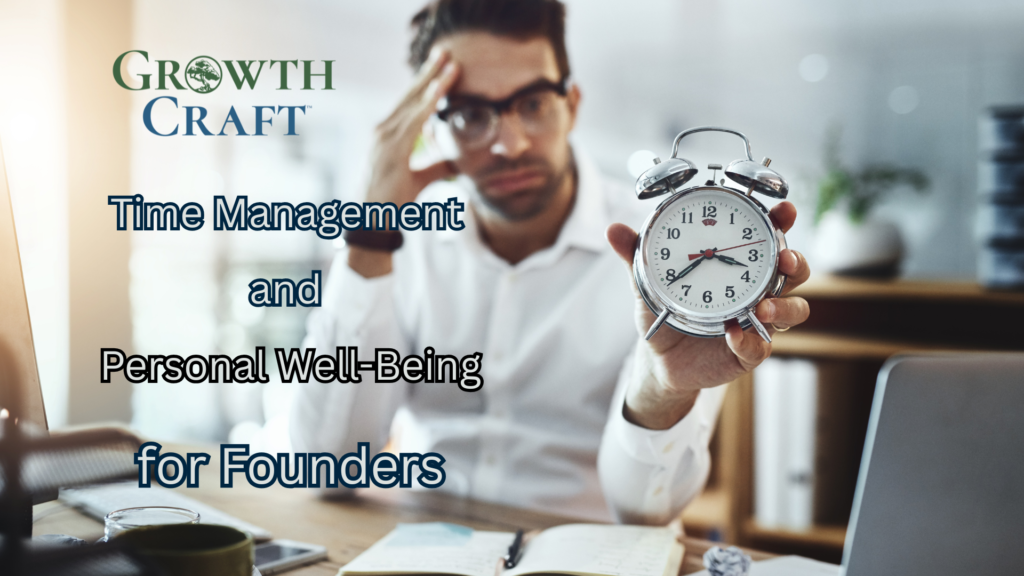
How Startup Founders Can Master Time Management and Personal Well-Being Without Burning Out

How Startup Founders Can Master Time Management and Personal Well-Being Without Burning Out

Introduction: The Founder Paradox – Growth vs. Sustainability

Startup founders are expected to be visionaries, operators, fundraisers, recruiters, marketers, and problem-solvers…all at once. The intensity is exhilarating, but it’s also dangerous. Poor time management and neglected personal well-being are two of the fastest paths to founder burnout, decision fatigue, and ultimately, company failure.

Many founders believe that sacrifice equals success. Long hours, skipped meals, and sleepless nights are often worn as badges of honor. But research, investor insights, and lived experience increasingly show the opposite: founders who manage their time intentionally and prioritize personal well-being make better decisions, lead stronger teams, and build more resilient companies.

This article explores how startup founders can balance the relentless demands of building a company while protecting their most critical asset, themselves!

Why Time Management and Well-Being Are Founder Responsibilities, Not Luxuries

Founders often treat time management as a tactical issue and wellness as a personal one. In reality, both are strategic leadership functions.

When founders are overwhelmed:

  • Everything feels urgent
  • Long-term strategy gets crowded out by “firefighting”
  • Decision quality drops
  • Culture suffers
  • Burnout becomes inevitable

Effective founders recognize that how they manage their time directly impacts how the company grows, and how they manage their health determines how long they can sustain that growth.

The Biggest Time Management Challenges Founders Face

Before jumping into solutions, it’s important to acknowledge the most common obstacles founders encounter:

1. Everything Feels Urgent

Customer issues, investor emails, team questions, product decisions, everything demands attention now.

2. Constant Context Switching

Meetings, Slack messages, emails, and ad hoc requests fragment the day and destroy deep focus.

3. Founder Dependency

Early-stage teams often rely on the founder for decisions that could (and should) be delegated.

4. No Clear Boundaries

Work bleeds into nights, weekends, and personal relationships, creating chronic stress.

Recognizing these patterns is the first step toward changing them.

Proven Time Management Frameworks for Startup Founders

1. The Eisenhower Matrix: Escaping the Urgency Trap

The Eisenhower Matrix helps founders categorize tasks by urgency and importance:

  • Urgent & Important: Crises, deadlines, critical customer issues
  • Important, Not Urgent: Strategy, hiring, product vision, relationships
  • Urgent, Not Important: Interruptions, many emails, unnecessary meetings
  • Neither: Time-wasters

Founders often spend too much time in the Urgent & Important quadrant, constantly reacting. High-performing founders intentionally protect time for Important, Not Urgent work…where real company value is created.

Founder takeaway: If your calendar is full of emergencies, your system, not your effort, is broken.

2. Time Blocking: Designing Your Ideal Founder Week

Time blocking involves scheduling specific blocks of time for specific types of work, deep work, meetings, admin, and recovery.

Some founders, including Elon Musk, reportedly schedule in very small increments (even five-minute blocks). Others prefer larger, theme-based blocks.

Common founder blocks include:

  • Deep work (strategy, product, writing)
  • Meetings
  • Admin and email
  • Learning and reflection
  • Personal health

Why it works: Time blocking reduces context switching, protects focus, and ensures strategic work actually happens.

3. Pomodoro Technique: Focus Without Burnout

The Pomodoro Technique uses 25-minute focused work intervals followed by short breaks.

This approach is especially useful for:

  • Mentally demanding tasks
  • Days filled with complexity
  • Preventing burnout during long work sessions

Founder insight: Short, intense focus periods often outperform marathon workdays.

4. “Eat That Frog”: Winning the Day Early

This technique encourages tackling the most difficult or important task first thing in the morning.

Founders often procrastinate on:

  • Hard conversations
  • Strategic decisions
  • Complex planning work

Completing the hardest task early builds momentum and reduces mental load for the rest of the day.

5. Delegation and Automation: Reclaiming Founder Time

One of the most common founder mistakes is holding onto tasks that don’t require founder-level thinking.

Examples to delegate or automate:

  • Scheduling
  • Reporting
  • Data entry
  • Routine customer support
  • Repetitive internal processes

Automation tools and delegation free founders to focus on vision, strategy, and leadership, the work only they can do.

Recommended Time Management Tools for Founders

Project & Task Management

  • Asana – Structured project tracking for teams
  • Trello – Visual task boards for simplicity
  • Notion – All-in-one workspace for docs, tasks, and planning
  • Todoist – Lightweight personal task management

Calendar & Scheduling

  • Google Calendar – Time blocking and visibility
  • YouCanBookMe – Automated meeting scheduling
  • Calendly – Open your calendar to allow people to book you without the email trails

Time Tracking & Focus

  • Toggl Track – Understand where time actually goes
  • RescueTime – Identify digital distractions
  • Forest – Gamified focus for deep work sessions

Why Founder Well-Being Is a Competitive Advantage

Founders are increasingly recognizing that burnout is not a badge of honor…it’s a business risk.

Neglecting personal well-being leads to:

  • Poor judgment
  • Short-term thinking
  • Emotional reactivity
  • Physical exhaustion
  • Increased founder turnover (or worse)

Well-being isn’t about doing less. It’s about sustaining high performance over the long term.

Core Personal Well-Being Practices for Founders

1. Consistent Routines Reduce Decision Fatigue

Morning and evening routines that include exercise, reflection, or meditation reduce cognitive load and create stability in chaotic environments.

Consistency creates predictability, something startups naturally lack.

2. Regular Breaks and Intentional Disconnecting

Founders often believe stepping away means falling behind. In reality, regular breaks:

  • Improve creativity
  • Reduce errors
  • Restore energy
  • Improve emotional regulation

Scheduling breaks is not indulgent, it’s preventative maintenance.

3. Sleep and Exercise as Business Functions

Sleep and exercise directly affect:

  • Memory
  • Decision-making
  • Emotional control
  • Leadership presence

High-performing founders treat sleep and exercise as non-negotiable inputs to performance, not optional extras.

Recommended Wellness Apps and Books for Founders

Wellness Apps

  • Headspace – Meditation and mindfulness
  • Calm – Sleep, stress reduction, and mental recovery
  • Happify – Science-based emotional well-being activities

Books for Mindset and Habits

  • Atomic Habits by James Clear – Building sustainable systems
  • Deep Work by Cal Newport – Focus in a distracted world
  • Getting Things Done by David Allen – Mental clarity through structure
  • The Hard Thing About Hard Things by Ben Horowitz – Honest realities of the founder journey

The Biggest Mistakes Founders Make (and How to Avoid Them)

Mistake #1: Confusing Busy with Productive

Fix: Measure outcomes, not hours.

Mistake #2: Avoiding Delegation

Fix: If someone else can do it at 70%, delegate it.

Mistake #3: Ignoring Personal Warning Signs

Fix: Burnout doesn’t arrive suddenly—it signals quietly.

Mistake #4: Treating Wellness as “Later”

Fix: Build systems now, not after things “slow down.”

Final Thoughts: Sustainable Founders Build Sustainable Companies

Time management and personal well-being aren’t separate from startup success…they are foundational to it.

The most effective founders:

  • Design their days intentionally
  • Protect time for deep, strategic work
  • Delegate aggressively
  • Treat health as a leadership responsibility
  • Build systems that support long-term performance

Startups are marathons disguised as sprints. Founders who recognize this early don’t just survive, they lead better, scale smarter, and last longer.

Frequently Asked Questions (FAQs)

1. How many hours should startup founders work?

There’s no magic number. What matters is output, decision quality, and sustainability, not raw hours worked.

2. How do founders avoid burnout without slowing company growth?

By focusing on leverage, delegation, automation, and strategic prioritization founders often grow faster with less burnout.

3. Is work-life balance realistic for startup founders?

Balance may shift over time, but work-life integration with intentional boundaries is both realistic and necessary.

4. What’s the best time management method for founders?

The best method is the one you’ll consistently use. Many founders combine Eisenhower Matrix + time blocking for best results.

5. When should founders start prioritizing wellness?

Immediately. Waiting until burnout appears is already too late.

How Startup Founders Can Master Time Management and Personal Well-Being Without Burning Out Read More »

Scroll to Top